The founder of Swedish papermaking
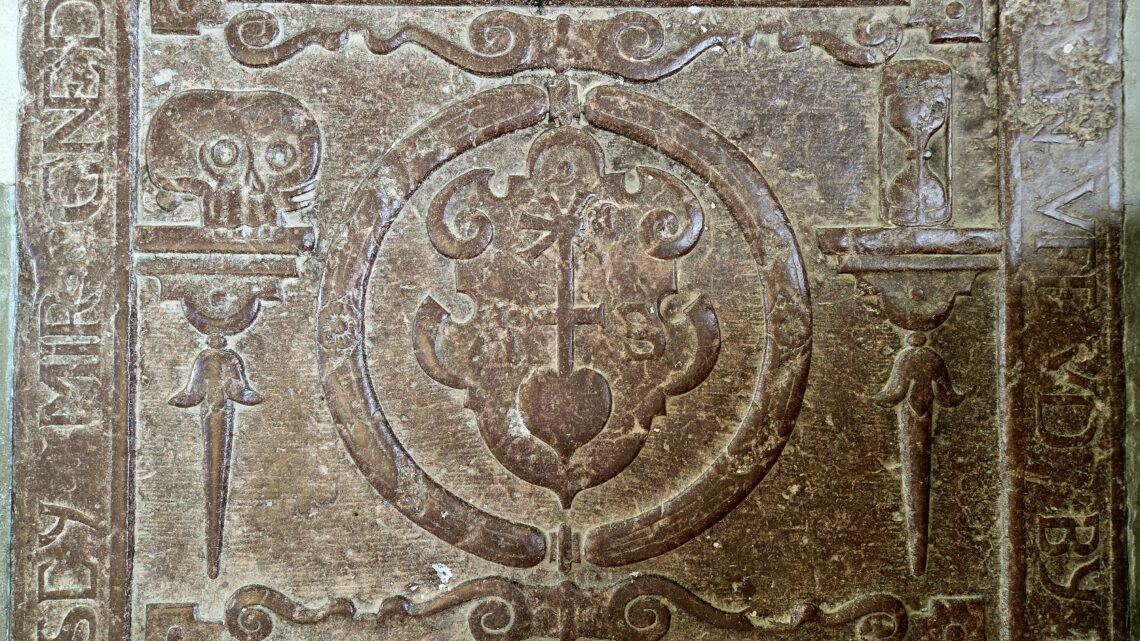
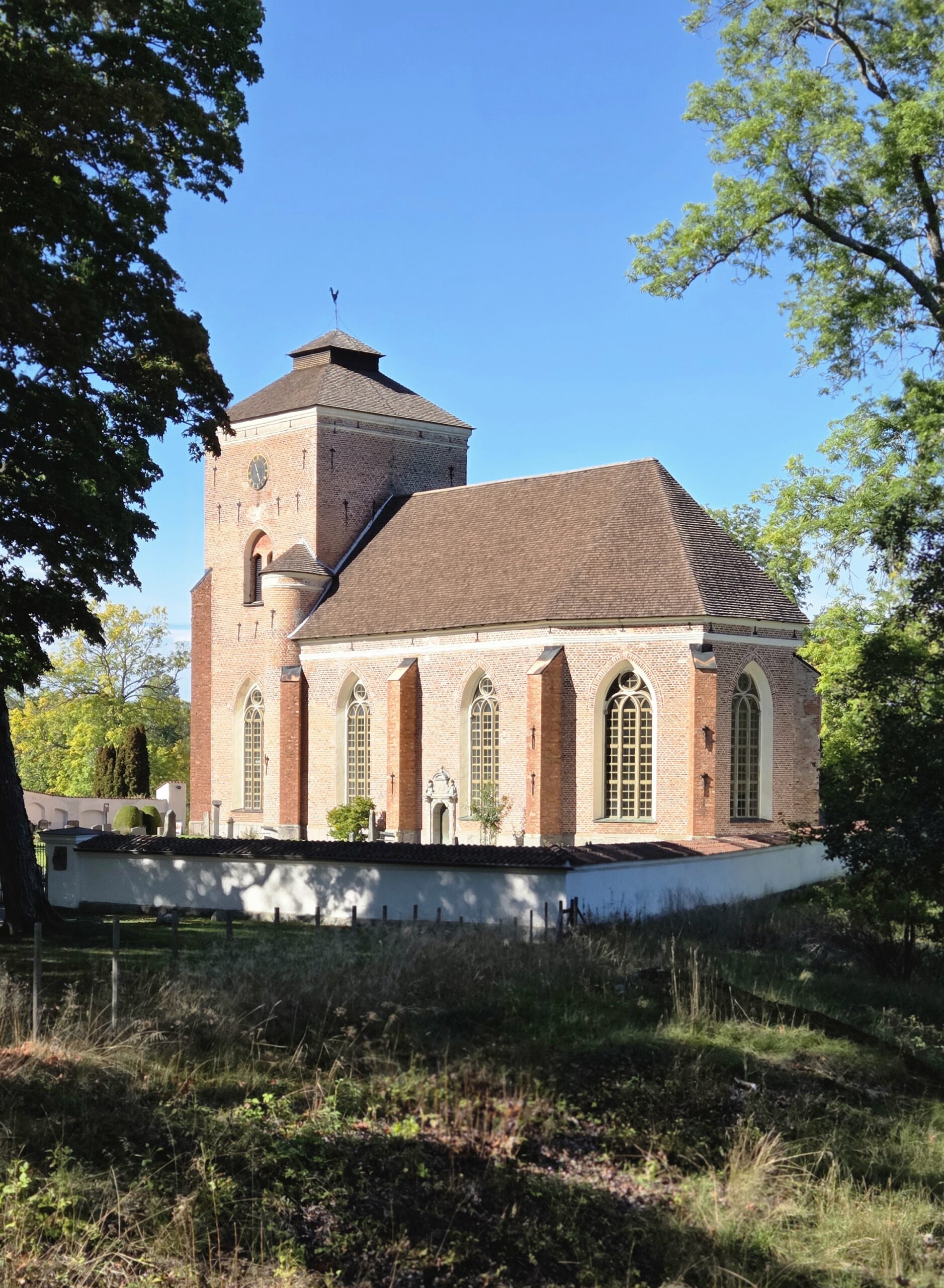
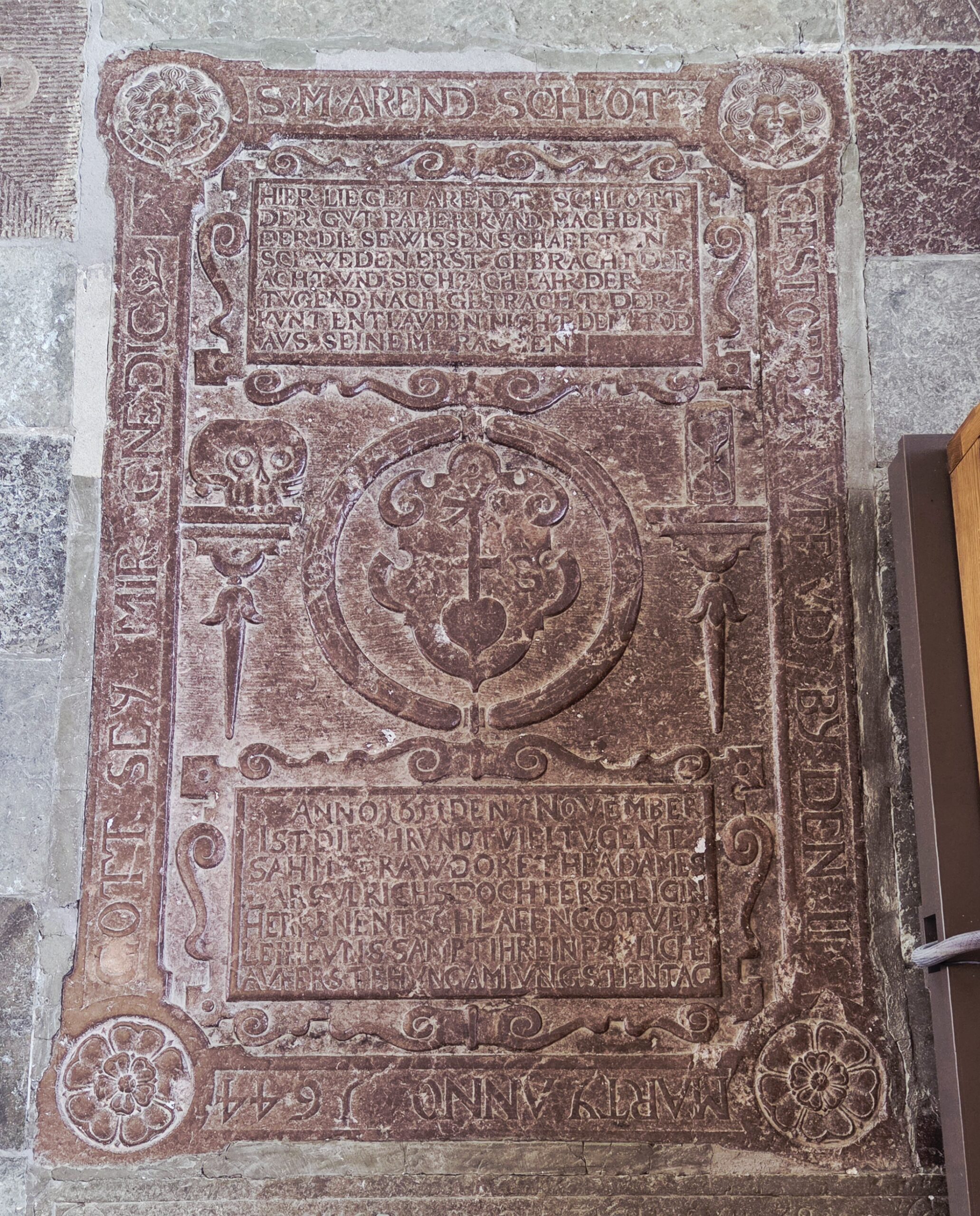
In Tyresö Church, south of Stockholm, there is an interesting gravestone, featuring the customary vanitas motifs, in commemoration of Arendt Schlodt (d. 1644). The stone was originally placed in the churchyard, was moved into the church in 1861 and placed in its current location in 1956. According to the proud inscription in German, Schlodt was Sweden’s first papermaker and thus an important figure in Swedish book and industrial history.
The full insription reads (in loose translation):
Here lies Arendt Schlodt, who could make good paper,
who first brought this art to Sweden,
who for sixty-eight years strove for virtue,
but who could not escape the jaws of death.
The inscription’s claim is not entirely accurate: Sweden’s first paper mill was located in Norrström, Stockholm, during the second half of the sixteenth century. However, the mill was discontinued and domestic paper production subsequently ceased for a generation. Regardless of whether Schlodt was aware of this history or not, he can still be said to have established this branch of industry permanently in Sweden.
As one of his first acts of government, King Gustav II Adolf ordered in January 1612 that a paper mill be established in Uppsala. Arendt Schlodt was appointed as manager and was also tasked with training Swedish apprentices in the craft. The mill was originally situated in the centre of the city, but was moved a few kilometres south, to the Ultuna area, after just a couple of years.
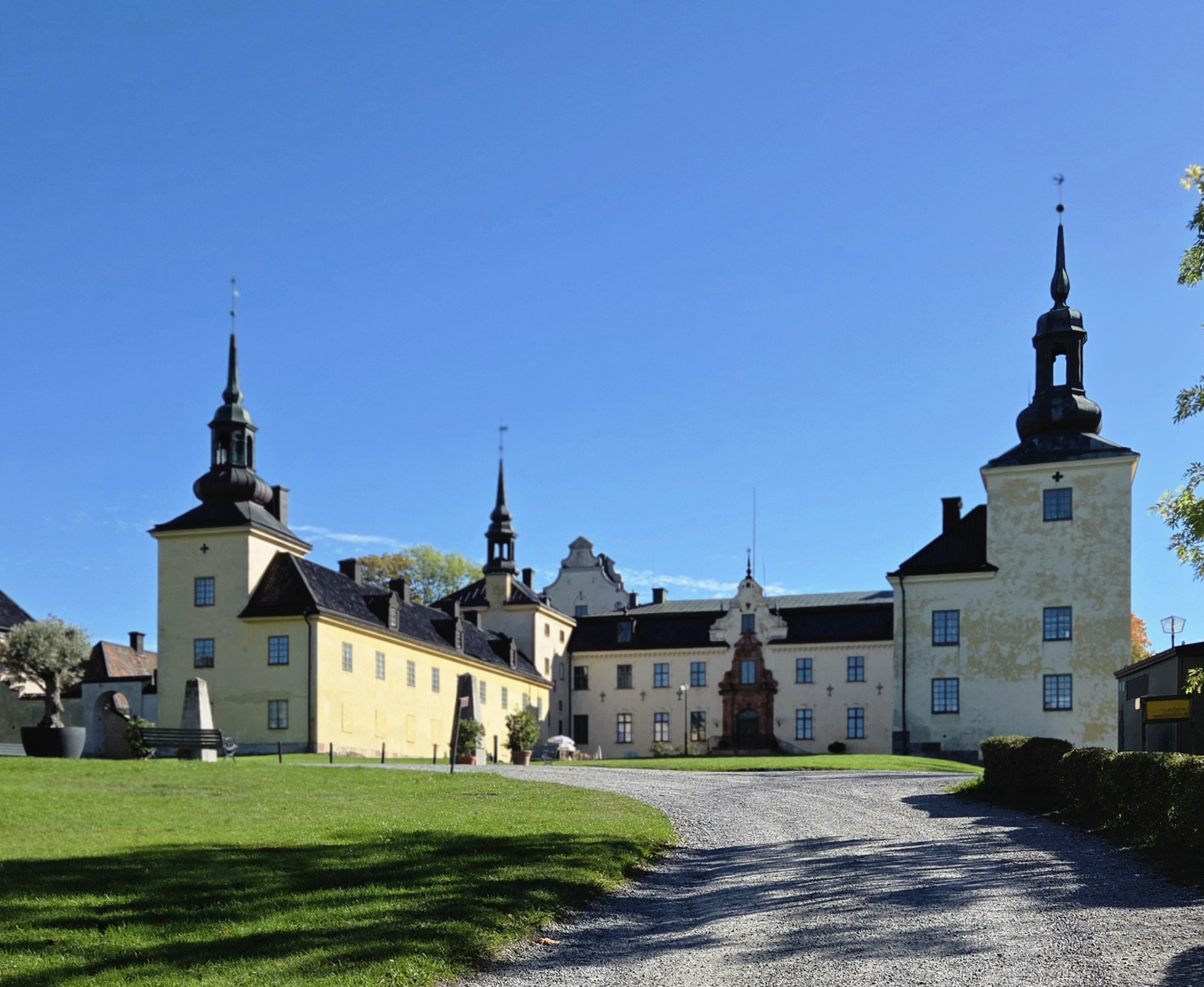
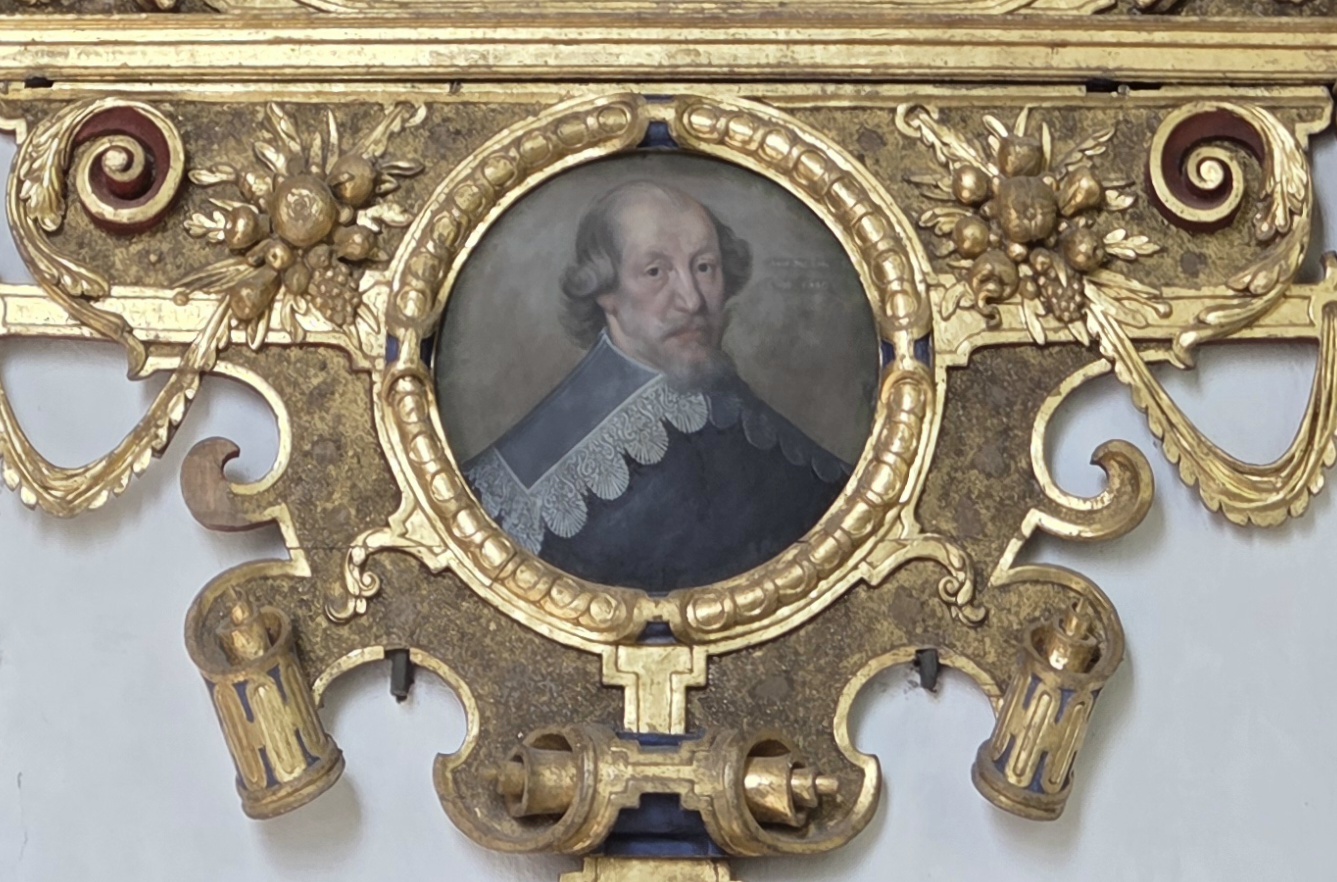
Schlodt worked in Uppsala for seven or eight years. Around 1620, he moved instead to Tyresö, south of Stockholm, where Privy Councillor Gabriel Gustafsson Oxenstierna established Sweden’s first private paper mill. At Uddby Waterfall, near the palace, there were good opportunities for all manner of industrial activity. Paper was needed not only for the expanding printing industry, but also for the growing bureaucracy of the emerging great power. Councillor Oxenstierna found a market for the production’s output amongst the capital’s central authorities.
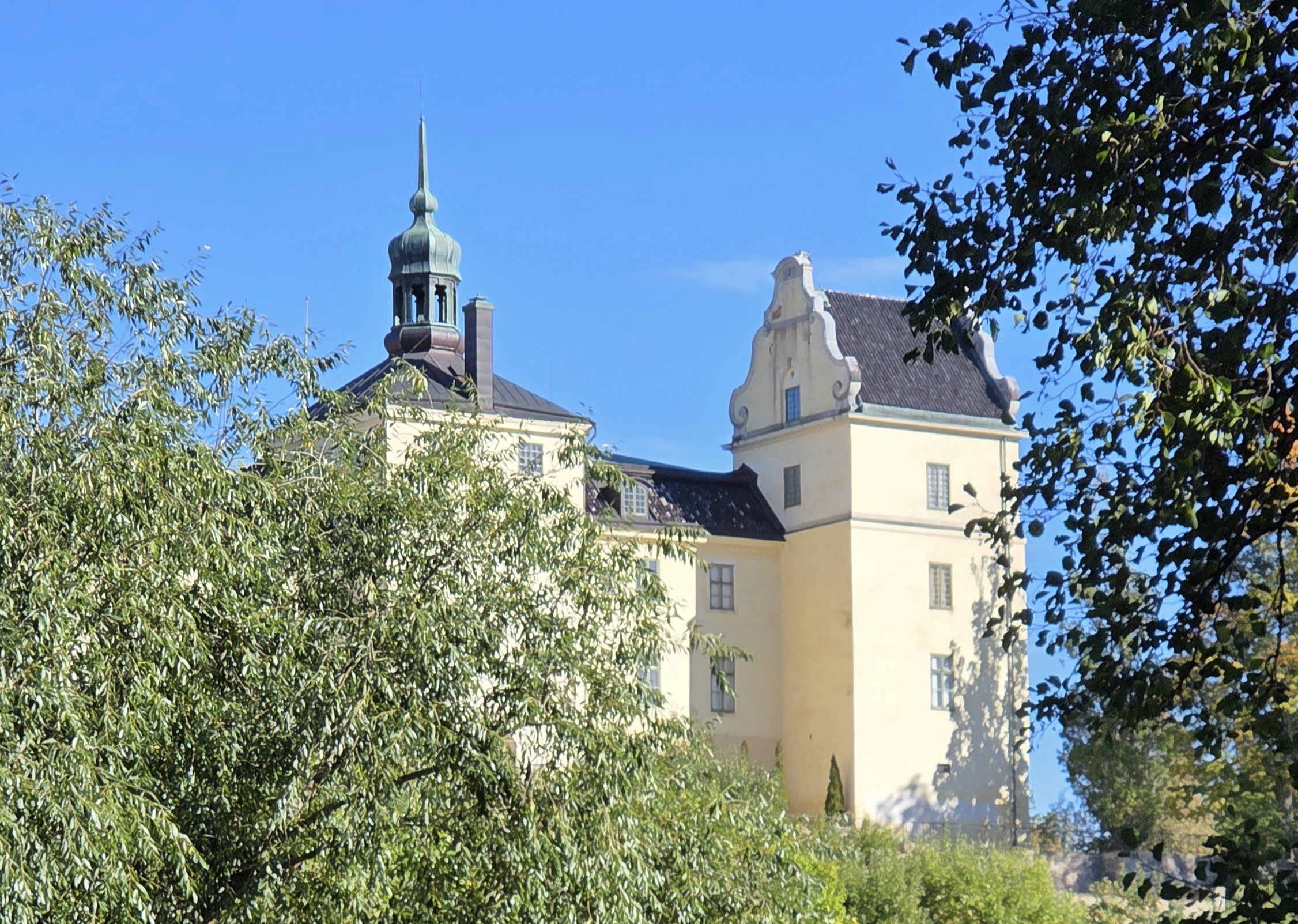
Master Arendt ran the paper mill on a leasehold basis until his death in 1644, after which his widow took over. After 1657, other parties continued successful paper production in what, under Countess Maria Sofia De la Gardie, became something of an industrial estate, comprising, amongst other things, a brickworks, a copper smithy, a sawmill, an oil mill, a linen weaving mill and a distillery. In 1661, Uddby Paper Mill was entrusted with supplying paper to the Stockholm Banco and producing the first banknotes in Europe. It continued its operations through modernisation and changes to production right up until 1895, when it was completely destroyed by fire.
The journeymen whom Schlodt trained were later found working at the paper mills in Uppsala and Linköping (Tannefors), at least, from where their knowledge subsequently spread further afield. Although Schlodt was not literally the first to manufacture paper in Sweden, it is not too far-fetched to call him the father of the Swedish paper industry. His gravestone in Tyresö Church is therefore a modest memorial to one of the foundational industries that built Sweden’s later prosperity.
It may be added that Schlodt is sometimes referred to in the literature as Arnold, which is a variant of Arendt. However, it seems to me safest to use the form of the name given on the gravestone, even though people in the seventeenth century were rarely fussy about such technicalities.